

Digital Transformation Strategy for Modern Businesses: A Complete 2026 Guide
Digital transformation is no longer optional. Businesses that fail to adapt risk falling behind competitors who are leveraging automation, data, and cloud technologies to scale faster and operate smarter.
A well-defined digital transformation strategy helps organizations modernize operations, improve customer experiences, and unlock new revenue streams. In this guide, we break down everything you need to know to successfully transform your business in 2026.
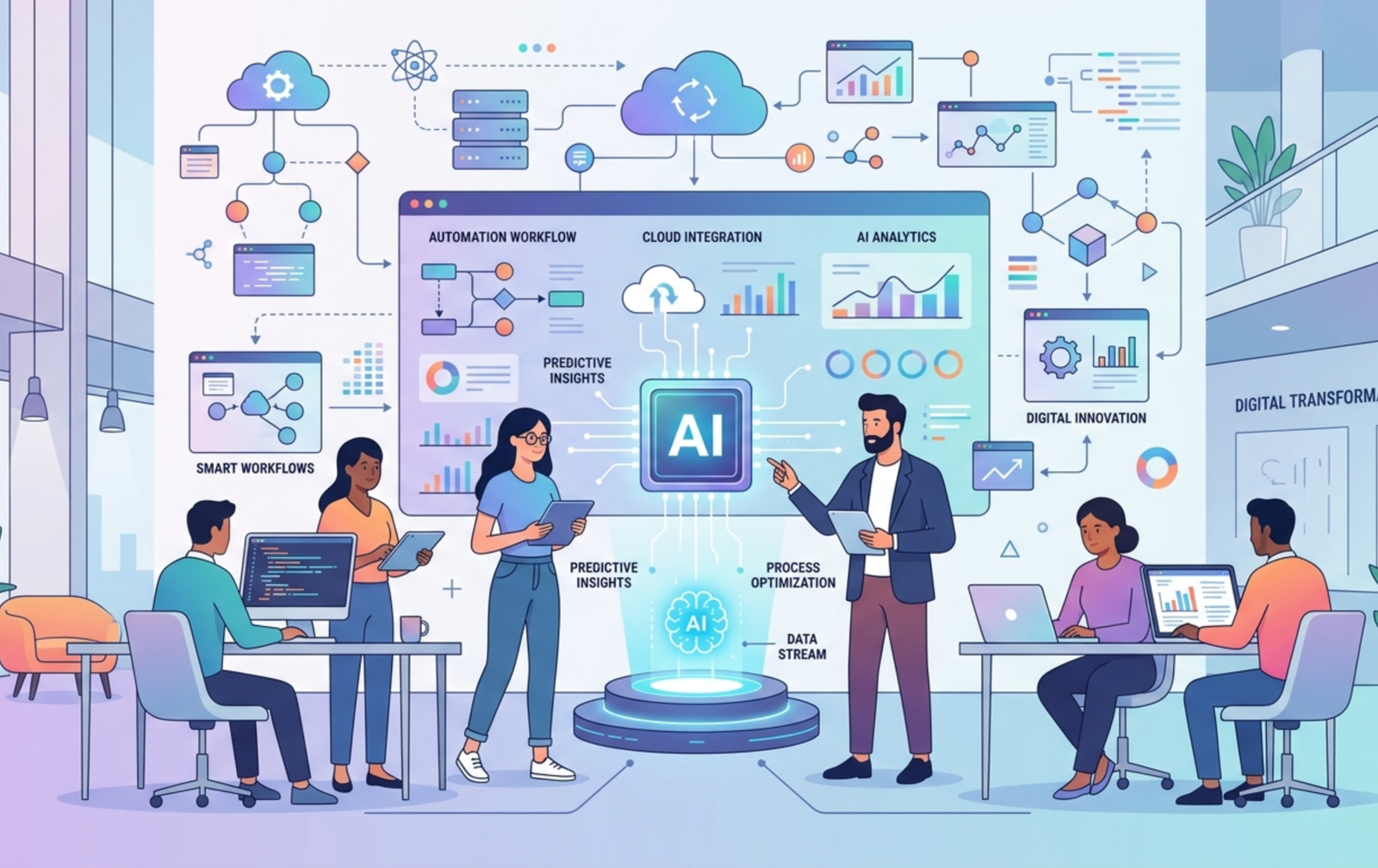
What is Digital Transformation?
Digital transformation is the integration of digital technologies into all areas of a business. It fundamentally changes how businesses operate and deliver value to customers.
This includes:
- Automating manual processes
- Migrating to cloud infrastructure
- Using data analytics for decision-making
- Enhancing customer experience through digital platforms
Why Digital Transformation is Critical in 2026
Businesses today operate in a fast-paced, technology-driven environment. Without transformation, inefficiencies grow and scalability becomes difficult.
Key Benefits:
- Increased operational efficiency
- Reduced manual workload through automation
- Better customer experience
- Data-driven decision making
- Faster time-to-market
Companies implementing enterprise digital transformation report significant cost savings and productivity gains within the first year.
Key Components of a Successful Digital Transformation Strategy
1. Clear Business Objectives
Start with defined goals such as cost reduction, growth, or improved customer engagement.
2. Process Automation
Use technologies like AI and RPA to eliminate repetitive tasks and reduce human error.
3. Cloud Adoption
Cloud platforms provide scalability, flexibility, and cost efficiency.
4. Data & Analytics Integration
Leverage data to gain insights, forecast trends, and optimize performance.
5. Customer-Centric Approach
Focus on improving user experience across all digital touchpoints.
Step-by-Step Digital Transformation Roadmap
Step 1: Assess Current Infrastructure
Identify gaps, inefficiencies, and opportunities in your existing systems.
Step 2: Define Transformation Goals
Align digital initiatives with business outcomes.
Step 3: Choose the Right Technologies
Select tools such as cloud computing, AI solutions, and automation platforms.
Step 4: Implement in Phases
Avoid disruption by rolling out transformation in stages.
Step 5: Monitor and Optimize
Continuously measure performance and improve systems.
Common Challenges and How to Overcome Them
Resistance to Change
Solution: Train teams and build a culture of innovation
High Initial Investment
Solution: Start with high-impact, low-cost automation projects
Integration Issues
Solution: Use scalable and compatible technologies
Lack of Expertise
Solution: Partner with experienced digital transformation providers
Digital Transformation Trends in 2026
- AI-driven automation across industries
- Increased adoption of cloud-native solutions
- Hyper-personalized customer experiences
- Rise of low-code and no-code platforms
- Strong focus on cybersecurity
Staying ahead of these trends ensures long-term competitiveness.
How the Right Technology Partner Makes a Difference
A reliable technology partner helps you:
- Design a scalable transformation strategy
- Implement advanced solutions efficiently
- Reduce risks and costs
- Ensure long-term growth
Choosing the right partner can accelerate your transformation journey significantly.
Conclusion
Digital transformation is the foundation of modern business success. Companies that invest in the right strategy, tools, and expertise will lead their industries in efficiency, innovation, and customer satisfaction.
If you are planning to transform your business, now is the time to act.